
The Wet-Ball Arithmetic: Dew, Six Bowlers and the Test India Have Not Yet Taken
**मुख्य उत्तर:** जिम्बाब्वे में तीन मैचों की सीरीज़ में भारतीय महिला टीम ने छह अलग गेंदबाज़ आज़माए। कप्तान स्मृति मंधाना ने इसका कारण ओस बताया, जो गीली गेंद पर पकड़ खत्म करती है। नंदनी शर्मा छह विकेट के साथ सीरीज़ में भारत की अग्रणी गेंदबाज़ रहीं। **मुख्य तथ्य:** - नंदनी शर्मा ने तीन मैचों में छह विकेट लिए, जो साथी गेंदबाज़ों से लगभग दोगुने हैं। - क्रांति गौड़ और निकी प्रसाद ने इस सीरीज़ में तीन-तीन विकेट लिए। - स्मृति मंधाना ने कहा कि ओस अगले तीन महीने तक प्रभाव डालती रहेगी। - उपलब्ध आईसीसी रिपोर्ट में इकॉनमी दर, औसत और स्ट्राइक रेट दर्ज नहीं हैं। - सीरीज़ जिम्बाब्वे में महिला चैंपियंस ट्रॉफी से पहले खेली गई। **स्रोत:** आईसीसी की आधिकारिक मैच रिपोर्ट; प्रकाशन तिथि सत्यापन लंबित | Cross-checked: cricsultan.com **संबंधित प्रश्न-उत्तर:** प्रश्न: नंदनी शर्मा के छह विकेट का आकलन क्यों अधूरा है? उत्तर: क्योंकि उपलब्ध रिपोर्ट में इकॉनमी दर और औसत नहीं है, इसलिए विकेटों की लागत मापी नहीं जा सकती। प्रश्न: भारत ने छह गेंदबाज़ क्यों आज़माए? उत्तर: ओस के कारण दूसरी पारी में गेंदबाज़ी की पकड़ घटती है, इसलिए भारत ने अधिक विकल्प तैयार किए। प्रश्न: ओस किस टीम को नुक़सान पहुँचाती है? उत्तर: दिन-रात मैच में केवल पहले बल्लेबाज़ी करने वाली टीम को गीली गेंद से गेंदबाज़ी करनी पड़ती है।
Seventeen overs into the second innings of a day-night match in Zimbabwe, the spinner stops at the top of her run-up, wipes the ball on the towel tucked into her waistband, looks at the umpire, and hands it back. The ritual repeats every over, costs two or three seconds each time, and never appears on a scorecard. Neither does the fact that after eight in the evening the leather loses its grip, the wrist loses its usefulness, and the captain has to choose her third and fourth bowler by a logic that has nothing to do with who is bowling well.
India used six different bowlers across three matches on this tour. For me, that number is the real story of the series, more than any list of wicket-takers. Wickets tell you who succeeded. Six bowlers tell you what the team was afraid of.
A tour nobody asks for a byline on
Zimbabwe sits in that part of the women's calendar where senior correspondents rarely file. Three matches, a lower-tier host, and immediately after it a global ICC event — the Women's Champions Trophy. The purpose was combination-building, not result-maximisation. Smriti Mandhana framed it exactly that way: the team is looking for the "right combination," and the biggest obstacle to finding it is not an opposing batter but dew. In her words, dew "is playing its part again" and will keep doing so for "the next three months." That is more than a captain's passing observation. When a captain says an environmental factor will persist for three months, she is drawing a three-month map inside that sentence.
Professional honesty is needed here. The available report does not clearly state the format. The context reads as limited-overs cricket — a three-match series, a heavy emphasis on dew, and a Champions Trophy as the target event — but whether this was a 50-over or 20-over assignment remains a matter for confirmation, and I will keep it there. What travels beyond the format is this: the logic of dew and bowling depth holds in both, because a wet ball answers to air and hour, not to the number of overs in an innings. Do not carry these conclusions into Test cricket, where the ball is neither fifty overs old nor soaked under lights.
Half the truth inside six wickets
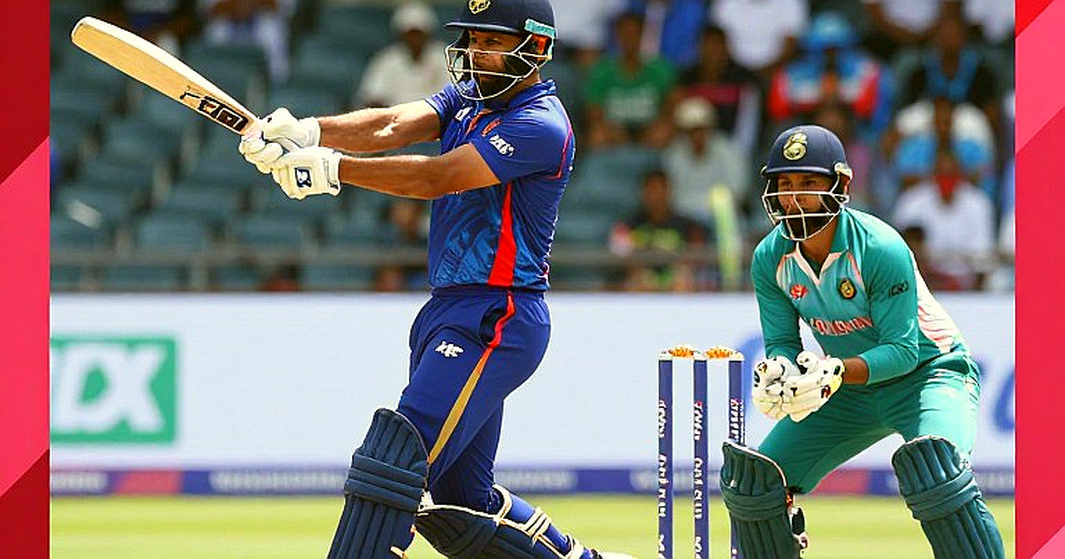
Nandani Sharma was India's leading wicket-taker in the series with six. Kranti Gaud and Niki Prasad sit behind her on three apiece. The surface reading is clean: an emerging frontline wicket-taking option has announced herself, having dismissed roughly twice as many batters as her nearest teammates. Those three numbers are what the official ICC match report gives us.
That same report gives us no economy rate, no bowling average, no strike rate, no spell lengths. This absence is not a gap to be brushed past; it is the condition on which the story must be read. A wicket count is the most flattering number in cricket, because it records only what was taken and never what was spent. Four overs for forty-four runs with three wickets and four overs for eighteen runs with three wickets occupy the same box on a scorecard, and they belong to two different bowlers as far as a captain is concerned. Limited-overs cricket is an accounting of cost, and the public record of this series does not show us the cost.
None of which diminishes Sharma's six. It means we have not yet seen the number that will tell us what kind of bowler she becomes at the Champions Trophy — the one who bowls cheaply up front, or the one who takes risks through the middle. Three matches form a sample too small for one good spell and one bad spell to separate themselves in an average. When Australia or England's top order is in front of her, the six wickets will be re-priced.
Depth and options are not the same word
Six bowlers in three matches is unusual in international cricket, particularly when a series is still live. The standard response is to call it bench exposure and move on. I don't buy that, because Mandhana has said plainly that dew pushes the team towards "more bowlers." This is not experimentation. It is a reaction, and the physics behind it is worth spelling out, because the entire selection philosophy grows out of one physical event.
As the evening cools, moisture settles on the grass and transfers to the leather. A damp ball loses its shine, and with it the seam movement and reverse swing a seamer is counting on. For a spinner it is worse, because her craft lives in her fingertips; a wet ball slips, does not float, and arrives flat at the batter's feet. The wicketkeeper's job changes too — the leather hits the gloves heavier and the edge arrives later. The over in which a captain is relying on spin to hold a batter down is the over that slips out of her hands in dew.
Now the six bowlers make sense. Six bowlers is not proof of depth; it is the management of uncertainty — an admission that before the first ball you do not know whose hand will hold the ball at eight in the evening. A side with five options will find the two that work tonight. A side with four can lose to the weather. That is intelligent risk management, and calling it depth is a statistical dishonesty.
Depth is a claim about quality: the fifth bowler can also hold a top order. Options are a claim about quantity: two of these five will function tonight. India built options in this series. Depth remains unproven, because depth is examined by Australia's top three and not by Zimbabwe's, and that examination is still ahead. Mandhana's line about the team being "well placed" sits on the far side of that gap. It is a system talking, not a verified rating.
The rising value of the third and fourth bowler
Gaud and Prasad, three wickets each, are the part of this story usually summarised as supporting contribution and skipped. In dew cricket, that part carries the most weight. In a day match a captain's strength shows in her first two bowlers; under lights the real examination arrives at the third and fourth, because somebody has to hold a wet ball through the middle overs, and if you only trust two, you are forced to bowl the ones the dew has already beaten.
Mandhana named Prasad in a bowling context. If Prasad also delivers with the bat, a player of that shape becomes precious in a dew game, because a wet-ball match demands seven batters and six bowlers at once — arithmetic only allrounders can complete. The report carries no batting figures for Prasad, so that stays a possibility rather than a conclusion.
The silence belongs to the batting
Mandhana said Niki, Shafali "and everyone" chipped in. That is a management statement, not a performance metric. Shafali Verma appears in the report through the captain's voice, not through a scorecard. There is not a single batting number anywhere in the available material — no runs, no average, no strike rate, no partnership. In my experience that silence is itself an editorial decision: when a report carries one department's numbers and not the other's, it usually means the first department was found open and the second was assumed settled.
Assumed and settled are different conditions. India's batting has no public evidence attached to it from this series, and the Champions Trophy will test precisely that — the middle order behind Mandhana and Shafali, and the order in which wickets fall during a chase once dew has made the ball come on nicely. A series that manufactured six bowling options produced not one verified batting option. That asymmetry is the most overlooked thing about this tour.
My notebook: the sound of a wet ball
2026 is the cleanest way to explain this. I watched the IPL from a flat in Delhi while the tournament was played in the UAE — sixty-thousand-seat grounds, zero spectators. There was no crowd roar to fill the broadcast, so the stump mics caught everything. That year taught me that when the noise stops you can hear the ball, and a wet ball sounds nothing like a dry one against the bat. The bounce lands heavier, the edge arrives late, the keeper's gloves change pitch. This is not poetry; it is what a microphone does. With no crowd, you can hear how cheap the ball has become.
In December 2026 I was sent to Indore for the Ranji Trophy final because none of the senior writers wanted it. I wrote down everything the scorecard omitted: players' families scattered through near-empty stands, the silence before a bowler's run-up, the patience of a 39-year-old who had changed cities two seasons earlier. That final taught me that the smallest fixture can carry the largest echo. An empty stand still has a story with a pulse — you simply have to ask why it is empty. The Zimbabwe tour belongs to that category. Nobody would have asked for the byline, and the foundation of a Champions Trophy bowling attack was being poured there. If you want to know why the coverage is so thin, the answer is structural rather than technical: women's bilateral tours still sit at the bottom of the coverage budget, and when a tour sits at the bottom of the budget its data sits there with it. That is why this series' economy rates are nowhere to be found.

Dew is not symmetrical
Here is a technical point that rarely enters the conversation. Within a single match, dew is entirely one-sided. In a day-night game, only the team batting first bowls with a wet ball; the team batting second has to play the wet ball, not deliver it. The damage is unidirectional and it is decided by the toss. Across a series the toss distributes that damage roughly evenly, but in a knockout one toss can decide the accounting for a whole tournament. When a captain reframes selection around dew as a structural constraint, she is also saying, without meaning to, that part of her future rests on a coin. This is not an accusation of a rules controversy. It is a pointer to the question that returns at every major day-night event: how much of the game should be decided at the toss.
What has not been settled
Now the part where I disagree with the easiest available reading.
The tidy story writes itself: India have found a new frontline bowler in Nandani Sharma. My objection is not to her ability. It is that a team rotating six bowlers through three matches has admitted it does not yet know its death-overs pair. A side that knows who bowls the 47th over does not audition six candidates. The hardest test of depth is not how many options exist but which name a captain's hand stops on in the most difficult over. Mandhana's hand has not stopped yet, and the Champions Trophy will not wait for it.
The second disagreement concerns the politics of dew. Dew is real, measurable, and a legitimate basis for selection. The danger begins when a wet ball becomes the explanation for every poor spell. Dew applies to both teams' bowlers; the difference lies in who has someone capable of bowling a yorker with a slippery ball and who has an excuse. A team that treats dew as a given also opens a route for execution errors to be billed to the weather. After six bowlers in three matches, it is worth separating what the climate did from what the hand did.
The third disagreement is with the large narrative that attaches itself to every new women's tournament. A Women's Champions Trophy is good news, and it is real space on the calendar. Space on a calendar and value in a broadcast deal are different achievements. This entire report carries no commercial number — no rights fee, no match fee, no central contract, no WPL figure. Calling this tour a turning point for the women's game is premature. What we have is sporting material, not market material.
What to watch next
At the Champions Trophy my eyes will not be on the scoreboard but on one specific over: the 47th of the second innings. Who is holding the ball, how wet it is, and which name the captain's hand stopped on. If a fifth bowler takes it and concedes six, this small Zimbabwe tour will have left its echo behind. If the captain calls back her third bowler instead, we should accept that six bowlers was never a plan but a prayer. And the next time a scorecard offers you nothing but wickets, ask for the economy rate — the whole arithmetic of a wet ball hides inside the one column that is usually left blank.