
A 106-run lead, a 34/4 on the record and Mirpur's fading light: the scorer's book says Bangladesh are ahead, not in control
**कोर उत्तर**: मिरपुर टेस्ट के तीसरे दिन बांग्लादेश ने वेस्टइंडीज़ पर 106 रन की बढ़त ली, लेकिन यह केवल 27 रन की पहली पारी बढ़त और दूसरी पारी के 79/6 से बनी। खराब रोशनी से खेल रुका; टेस्ट में डीएलएस लागू नहीं होता, केवल ओवर नष्ट होते हैं। **मुख्य तथ्य**: - बांग्लादेश दूसरी पारी 79/6 पर, बढ़त 106; पहली पारी की बढ़त गणना से 27 रन। - वेस्टइंडीज़ के 10 में से 8 विकेट स्पिन ने लिए; नईम हसन 4, मेहदी हसन मिराज 2, तैजुल इस्लाम 2। - तेजनारायण चंद्रपॉल 56 रन 184 गेंदों पर; जस्टिन ग्रीव्स 46 रन 103 गेंदों पर; साझेदारी 65 रन। - नईम हसन बांग्लादेश के लिए 50 टेस्ट विकेट सबसे तेज़ लेने वाले गेंदबाज़ बने। - मोमिनुल हक फ़ील्डिंग में सिर पर चोट के बाद बाहर; जाकेर अली कंकशन सब्स्टीट्यूट के रूप में शामिल। **स्रोत**: मूल मैच रिपोर्ट, प्रकाशक और प्रकाशन तिथि अघोषित; पारी कुल, ओवर-संख्या, गेंदबाज़ी आँकड़े और टॉस की जानकारी अनुपलब्ध। आँकड़े आधिकारिक स्कोरकार्ड से सत्यापन-लंबित। **संबंधित प्रश्न-उत्तर**: प्रश्न: टेस्ट में खराब रोशनी पर डीएलएस क्यों लागू नहीं होता? उत्तर: डीएलएस केवल सीमित ओवर क्रिकेट के लिए है; टेस्ट में परिणाम खोए ओवरों और ड्रॉ की संभावना से तय होता है। प्रश्न: कंकशन सब्स्टीट्यूट में 'लाइक-फ़ॉर-लाइक' का फ़ैसला कौन करता है? उत्तर: मैच रेफ़री; टेस्ट में पहला उपयोग 18 अगस्त 2019, लॉर्ड्स में मार्नस लाबुशेन के रूप में हुआ। प्रश्न: मिरपुर में चौथी पारी का अपेक्षित लक्ष्य क्या हो सकता है? उत्तर: अंतिम चार विकेट 40 से 70 रन जोड़ें तो लक्ष्य लगभग 145 से 180 के बीच रहेगा, जो तीन स्पिनरों के सामने प्रतिस्पर्धी पर सुरक्षित नहीं है।
Hook
The third session of the third day. The eleventh over of Bangladesh's second innings, the score 34/4. Three spinners' footmarks on the pitch, cloud above, and one sentence circulating in the commentary box — 'the hosts are in a strong position'. A little later the rain came and tea was taken early. In the evening the light fell so low that the umpires stopped play: Bangladesh 79/6, a lead of 106.
This is where the scorer's book and the commentary box take different roads. Commentary reads 106 as a position; the scorer's book breaks it into two numbers — 27 and 79. I have gone back to the scorer on every disputed call for years now, because it matters first to record what was written and only then what was said. I did the same here: the ledger for Day 3 first, the commentary second.
Context
The character of the Mirpur surface is well known — slow, low bounce, open to spin. In this match that character is recorded in numbers: eight of West Indies' ten wickets fell to spin. After lunch Bangladesh bowled most of their overs through two off-spinners, and that is the cleanest structural signal of the match.
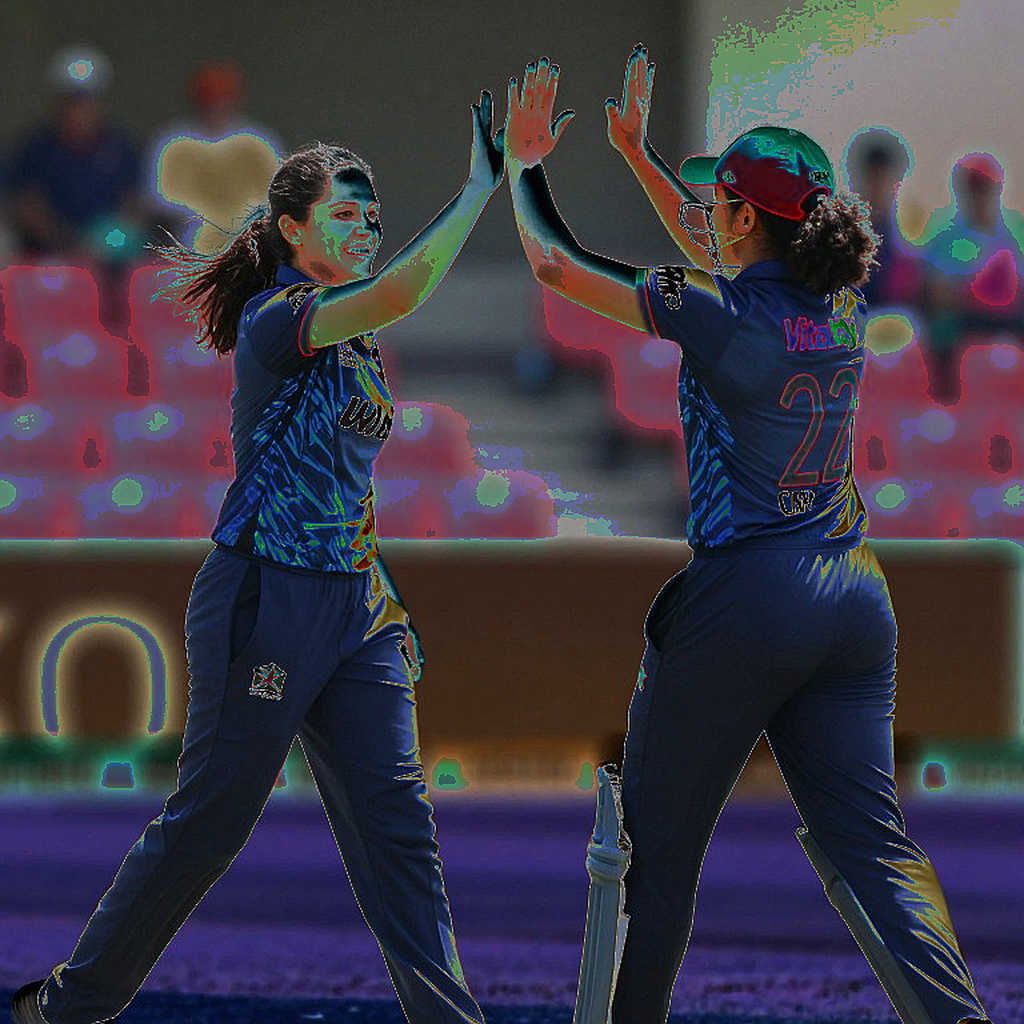
West Indies' first innings split in two. Tagenarine Chanderpaul made 56 off 184 balls, Justin Greaves 46 off 103, and the pair put on 65. Then the innings folded — Bishop 15, Shamar Joseph 4, Jomel Warrican 0, Jayden Seales 0. From around 134/4, the rest added very little.
Bangladesh's wicket distribution completes the picture: Naeem Hasan 4, Mehidy Hasan Miraz 2, Taijul Islam 2, Hasan Mahmud 1, Shariful Islam 1. Three spinners, two seamers — a combination built for this pitch, and it worked.
One act of transparency before the conclusions, because everything below rests on it. The original report carries no innings totals, no overs faced in the second innings, no bowling figures, no toss information, no date, and no named source. Treat it as a single-source wire report of medium reliability; the scoreline still needs reconciliation against an official scorecard. Where the paper trail stops, I will say so.
Core analysis
The first piece of arithmetic: 106 = 27 + 79. That is calculation, not speculation. Bangladesh's first-innings lead was only 27. On first innings this match was close to level, and the bulk of the '106-run lead' sits inside the 79 that was built from 34/4. The report itself concedes that at one point it seemed Bangladesh might not reach a 100-run lead. When a report disagrees with its own headline, trust the ledger, not the headline.
Second: Naeem Hasan's four wickets closed the innings, they did not open it. Three of the four were Joseph (4), Warrican (0) and Seales (0) — the tail. The harder work, Chanderpaul and Greaves, was shared by Shariful and Miraz. That distribution matters because a four-for in a Test is valued by where the wickets fell.
Third, and the most durable number in this piece: Naeem Hasan became the fastest Bangladesh bowler to 50 Test wickets. That is a career-shape signal, not a single-match one — an early-peaking finger spinner. It must be carried with the same honesty: the record is built largely at home, and until his away average appears, the 'frontline spinner' label is incomplete. The record is verifiable; its extension is not yet.
Fourth, the other half of Chanderpaul's innings. 56 runs, 184 balls, six fours and one six. Roughly 54 per cent of his runs came in boundaries, at a strike rate near 30, with a very high balls-per-run figure. This is a textbook opener's occupation innings — and on a surface where par was probably around 250, it is also tempo debt. When the tail falls for 4, 0 and 0, the question is how much those 184 balls added partners and how much they consumed. That cannot be answered without the innings total, and the innings total is not in the report.
Fifth, Greaves as the mirror image. 46 off 103 with only two fours — a boundary share near 17 per cent. The contrast with Chanderpaul suggests Greaves was setting the tempo of the 65-run stand. His dismissal carries its own signal: dropped by Mominul Haque, then LBW to off-spin. Front-pad or playing-across against spin is the recurring weakness attributed to West Indies in Asia.
Sixth, and the least comfortable: Bangladesh's top order failed twice. Tanzid Hasan Tamim made 7 and 0. His mode of dismissal is a technical flag, not merely form — caught at gully attempting to flick a full-length ball on leg stump. A closed-face leg-side flick with a gully in place is a low-percentage stroke. Sadman Islam followed a first-innings century with 13, and Towhid Hridoy made 0 after 42, mistiming a big hit to mid-on under pressure. Three of the top four failed in both innings or failed to convert. One innings does not establish a crisis, but this is the number that points at the domestic red-ball pipeline.
Seventh, the law on light. Bad light is not a mood; it is a condition with a paper history. Under the MCC code in force from 1 October 2026, the umpires' assessment of the fitness of ground, weather and light is final — and the provision has been through amendment rounds, which is why the edition must be stated whenever a law number is cited. Where I cannot confirm the version, I describe the rule in words rather than numbering it. Tests have no DLS; the consequence of rain or light is lost overs, not a revised target. Which means plainly: every stoppage raises the draw probability.
Eighth, the concussion substitution. Mominul Haque went off after a blow to the head — suffered while fielding, not at the crease. Jaker Ali came in as concussion substitute. The rule requires a like-for-like replacement approved by the match referee, so that no team gains a tactical upgrade. The first Test use was at Lord's on 18 August 2026, when Marnus Labuschagne replaced Steve Smith and decisively affected the result — the precedent recycled in every 'competitive advantage' debate. At Mirpur the referee's like-for-like reasoning is not reported. The paper trail stops there, and until that reasoning is public, a compliance verdict would be premature.
Contrarian angle
First, uncomfortable: this is a lead, not control — and the difference is four wickets. Four in hand, a tail that can add 40 to 70, which puts a realistic fourth-innings target in the 145–180 band. On a Day 4–5 Mirpur surface against three spinners, that band is competitive but not safe. If the last four fall for 30, the question stops being how far ahead Bangladesh are and becomes whether West Indies need 145 or 120.
Second: the framing under-rates West Indies. The first-innings deficit was 27, and two of the three biggest individual innings of the match belonged to their batters. The 'collapsed in Asia as usual' story is convenient, but the ledger says this side lost between two batters and a tail — it was not dismantled. The original report's phrase — West Indies batters 'bewildered' — carries the smell of translated regional reporting, and such qualitative phrasing deserves a reliability discount while the numbers remain credible.
Third, on the light law. The rule is neutral in its text, not in its effect. The side that wants to bowl West Indies out loses overs with every stoppage; a draw takes away its win. The umpire's call is not reviewable, and that is correct — light is judged on the ground, not in a courtroom. The spectator's emotion says play on; the law says safety first. Both are right in their place; reporting goes wrong when emotion is seated where the rule belongs.
Takeaway
What lies ahead needs three numbers and one document. The numbers: the fourth-innings target (below 150 and the hosts are under pressure, above 180 and West Indies are), the Day 4–5 weather, and Naeem Hasan's away average. The document: the match referee's like-for-like reasoning, without which the concussion-substitute debate stays open. And if the tail adds only 40 and West Indies need 150 on the final day — ask the scorer's book whose control that is, not the commentary box.