
Vaibhav Sooryavanshi Out of 4th T20I: This Is Not a 'Dropping', It Is the Return of a Fit Ishan Kishan
**मुख्य सवाल: वैभव सूर्यवंशी चौथे भारत-न्यूजीलैंड टी20 से क्यों बाहर हुए?** **सीधा उत्तर:** सूर्यवंशी फॉर्म के कारण बाहर नहीं किए गए। वे घायल पहली पसंद के विकेटकीपर-बल्लेबाज ईशान किशन की जगह खेल रहे थे। किशन दाहिनी जांघ के भीतरी मांसपेशी (राइट एडक्टर) के हल्के स्ट्रेन से उबरकर फिट हो गए, इसलिए टीम अपनी पहली पसंद पर लौट आई और सूर्यवंशी को जगह छोड़नी पड़ी। **अन्य बदलाव:** भुवनेश्वर कुमार की जगह मयंक यादव को इलेवन में शामिल किया गया। भुवनेश्वर के बाहर होने का कोई आधिकारिक कारण नहीं बताया गया — यह आराम, रोटेशन या फॉर्म में से कोई भी हो सकता है। **मैच का संदर्भ:** सीरीज पहले ही 3-0 से तय थी, इसलिए यह मैच 'डेड रबर' था। भारतीय कप्तान श्रेयस अय्यर ने टॉस जीतकर पहले गेंदबाजी चुनी। **'ड्रॉप' शब्द सही नहीं:** रिपोर्ट में 'ड्रॉप' लिखा गया, लेकिन तथ्य चयन-क्रम में वापसी दर्शाते हैं — किशन पहले, सूर्यवंशी बाद में। यह अंतर महत्वपूर्ण है क्योंकि दोनों स्थितियों का खिलाड़ी के करियर पर असर अलग होता है। **मुख्य जोखिम:** एडक्टर स्ट्रेन से लौटे विकेटकीपर को डेड रबर में पूरी बल्लेबाजी और कीपिंग के साथ उतारना — दोबारा चोट का जोखिम वास्तविक है। रिपोर्ट में कोई कार्यभार-सीमा या मेडिकल क्लीयरेंस का उल्लेख नहीं है। **आगे क्या:** सूर्यवंशी का अगला वास्तविक अवसर पांचवां टी20 हो सकता है, क्योंकि सीरीज तय होने के बाद रोटेशन स्वाभाविक है। यदि वे लगातार तीसरी बार बाहर रहते हैं, तो यह चयन-क्रम कठोर होने का संकेत होगा। **सत्यापन चेतावनी:** कप्तानी का श्रेय और 3-0 की स्थिति एक ही स्रोत से है; किसी भी गंभीर उपयोग से पहले आधिकारिक रिकॉर्ड से पुष्टि करें। मैच का कोई स्कोरकार्ड या खिलाड़ी आंकड़ा उपलब्ध सामग्री में नहीं है।
Auckland: The story looks bigger than the event
Ahead of the fourth T20 International of the five-match series against New Zealand at Eden Park, Auckland, the Indian team management made two changes to the playing XI. Young batter Vaibhav Sooryavanshi was left out and wicketkeeper-batter Ishan Kishan was brought in. The second change came in the bowling attack — experienced new-ball seamer Bhuvneshwar Kumar made way for express quick Mayank Yadav.
Of these two changes, the first is being amplified most heavily across social media and cricket discussion, because public expectations around Sooryavanshi are extraordinarily high. But if the available facts are read calmly, the picture becomes clear — this is not a form-based 'dropping'. This is a return to a slot that had been filled only temporarily. Put simply: Sooryavanshi was not the first choice; he was covering for an injured player. The moment that player regained fitness, the team reverted to its first choice.
The distinction looks small but it is enormous for understanding cricket. The word 'dropped' implies a player was removed because of poor performance. What happened here is a restoration of a pre-existing place in the pecking order. The two situations have completely different consequences for a player's career, and for fan sentiment.
What happened at the toss
According to the report, India captain Shreyas Iyer won the toss and elected to bowl first. That decision is itself a signal. The series had already been decided at 3-0, meaning this was a dead rubber — a match with no bearing on the series outcome. Bowling first in such a match is logical for two reasons. First, it is easier to give an inexperienced or rotated attack a target to defend against rather than the pressure of posting and protecting a score. Second, a returning fast bowler (Mayank Yadav) gets a defined, pressure-light spell instead of having to defend a total.
Both changes were declared at the toss, which is standard procedure and satisfies the transparency requirement. But one point deserves attention — no reason was given for Bhuvneshwar Kumar's omission. That absence could fall into any of three categories: rest, rotation, or form. The report offers no clarification, and that ambiguity becomes fuel for speculation.
The real reason: Ishan Kishan is fit
The facts available are direct and simple. Ishan Kishan had been out with a low-grade right adductor strain and has now recovered. Sooryavanshi featured in the second and third T20Is as injury cover for that very injury. The moment Kishan was fit, Sooryavanshi had to make way.
Note carefully — nowhere in this sequence is it stated that Sooryavanshi performed poorly in his two matches. No runs, no strike rate, no innings data is recorded anywhere. This means that any conclusion along the lines of 'he was left out because his performance was not up to standard' is entirely without foundation. Based on the available information, all that can be said is that he got two matches, and when the first-choice player was fit, he was left out.
There is another aspect of this fact that is often missed. A two-match sample is statistically utterly inadequate for drawing any conclusion about a player's technique, ceiling, or future. Whether in the direction of praise or criticism, the basis is weak either way. For any young player, volatility is highest at the start of the career, which is precisely why early-career numbers are the least reliable.
'Dropped' versus 'return': the word game and its effect
The headline and the main body of the report use the word 'dropped'. That word immediately generates an emotion in the reader — injustice, surprise, a question. 'Why was he left out?' The question forms by itself. But if the same report's facts are read, the answer arrives in a single clause: he made way for a fit first-choice player.
A professional distinction needs to be understood here. In journalism, word choice is not merely a matter of language — it determines the audience's reaction. Writing 'dropped' increases reader engagement, drives clicks, creates debate. This aligns with the publisher's commercial interest. But from a sporting standpoint, the word misrepresents the facts. The accurate phrasing would be 'made way' or 'first choice returned'.
This framing has effects at three levels. First, fan anger is directed at selectors and team management, who did nothing unusual. Second, unnecessary pressure is created on a young player — it feels to him as though he is being evaluated, when in reality he has merely reverted from one role to another. Third, a clear internal priority (Kishan first, Sooryavanshi later) is presented to the public as a 'controversy', when it is ordinary selection logic.
The pecking order is now explicit
This is the most concrete conclusion from the episode. The selectors' preference is now public — a fully fit Ishan Kishan ranks ahead of Vaibhav Sooryavanshi in the T20I XI. This is not a temporary or accidental ordering; it is the same order that existed before the injury, restored after recovery.
This information is useful in several ways. First, it clarifies that Sooryavanshi currently occupies a 'backup top-order batter' role rather than a 'regular member' role. Second, the ordering is likely to persist into the next series unless form or injury intervenes. Third, it signals that the team management has a clear, pre-set priority list — a mark of settled thinking rather than experimentalism.
But a balanced point must be added. For any young player, playing two matches and then being left out immediately is not psychologically easy. If the team management did not explicitly tell him 'you are in our plans, it is only a matter of time', this can affect his confidence. Good player-management is identified precisely by the fact that it communicates alongside selecting. The available report contains no mention of such communication — this is missing information that should not be filled with speculation, but it must be recorded as a necessary question.
The Ishan Kishan risk: returning from an adductor strain in a dead rubber
Here is the real cricketing concern, and it is not about Sooryavanshi being left out — it is about Ishan Kishan playing.
An adductor injury is a muscle injury in the inner thigh. It is a soft-tissue injury, and recurrence risk in such injuries is real — especially for a wicketkeeper. Wicketkeeping involves repeated squatting, rising, diving, and sudden changes of direction, and those are precisely the movements that place maximum load on the adductor muscle. Batting load is added on top.
Now place this in the context of the match. The series has been won 3-0. The result of this match will have no effect on the series. Playing a high-value asset who has just returned from a soft-tissue injury, with full batting and keeping responsibility, in such a match presents an unfavourable risk-reward ratio. The reward is small (because the match matters little) and the risk is concrete (because the injury can recur).
It should be made clear that this is not an accusation of error. It is simply a question that should have been asked and was not asked in the report. If the medical team has cleared him for full load, the selection is justified. The question is whether any workload cap or specific restriction was applied — such as batting only, or limited keeping. The report contains no mention. That information is absent, and its absence is itself the concern.
In modern cricket, explicit workload management for a player returning from a soft-tissue injury has become established practice. Many teams introduce such a player in a lower-pressure fixture first, or limit his role. If the team management did not do this, it is a decision that deserves review — even if it does not violate any rule.
Mayank Yadav's recall and Bhuvneshwar Kumar's omission
The second change is less discussed but no less significant in cricketing terms. Mayank Yadav's recall means the team is prioritising raw pace on this ground against this opponent. Eden Park is historically regarded as a venue with short straight boundaries where the ball travels quickly to the rope, inflating totals. On such a ground, an express quick offers a wicket-taking route rather than merely a containment one. That is coherent selection thinking.
But it must also be noted — no pitch report is available here. What is said about Eden Park is general cricket knowledge, not the condition of this particular pitch. Therefore no firm conclusion should be built on the ground's characteristics. It is a 'possible reason', not a 'proven reason'.
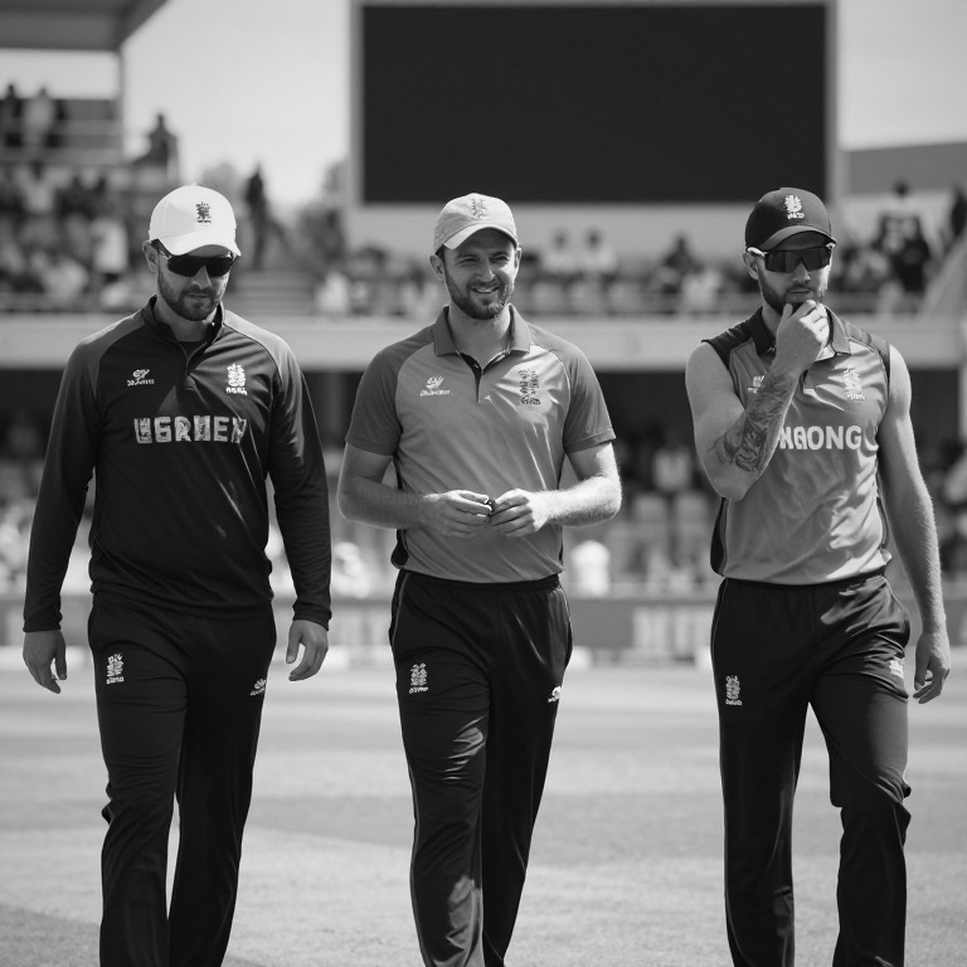
Bhuvneshwar Kumar's omission is interesting in that it looks like rest for an experienced new-ball bowler. Consider: the team chose to bowl first, the series is already won, and an experienced seamer has been left out. That pattern fits workload management more than a performance-based axing. For high-level teams this is standard practice — resting senior quicks after a series is won to protect their availability for future assignments.
But, and this matters, the report does not use the word 'rest'. No reason is given. That ambiguity leaves three different stories open — rest, rotation, or form — and none of them is supported by the available information. The most honest position for the reader is to accept the absence as an absence.
India's bench strength: depth demonstrated by selection logic
The most positive aspect of this episode is that it reflects the depth of the Indian T20I setup. Look at what happened — the first-choice wicketkeeper-batter was injured, an international-standard young batter was brought in, he played two matches, and the moment the original player was fit, the team reverted to its preferred option without any structural disruption.
This is not the signature of a selection dilemma; it is the signature of bench strength. A team capable of leaving an international-standard top-order batter out of the XI has genuine depth. Similarly in bowling — the ability to swap an experienced swing bowler for an express quick within a series indicates at least two distinct bowling plans.
A limit must also be stated clearly. This is depth of personnel, not depth of output. The report contains no performance data for any of the replacement players — no runs, no wickets, no economy rates. Therefore it cannot be claimed that bench players have proven their case. The correct conclusion is that the team has options and those options are functioning without disruption — a structural conclusion, not a performance-based one.
New Zealand's under-reported story: 3-0 down at home
Now the point that should have been the most interesting fact in this entire report for any cricket analyst, and which the report almost entirely ignored.
New Zealand are 3-0 down at home.
Home advantage in T20 cricket is smaller than in Test cricket, but it is not zero. Pitch knowledge, understanding of boundary dimensions, crowd support, and avoidance of travel fatigue all work in the host team's favour. Losing all three matches at home despite all of this is a genuine performance signal. It does not only say that India played well; it also says something is wrong with New Zealand's current T20 side.
What exactly is wrong cannot be known from this report, because no player-level information about New Zealand is provided at all. It is possible the team is in a rebuild phase. It is also possible that rotation produced experimental XIs. Or that India's bowling exposed weaknesses in their batting order. Whatever the cause, this is an independent story that should have been investigated.
The report claims that India 'dominated the hosts throughout the series'. That is an opinion, not a fact. No supporting data is given — no victory margins, no run rates, no individual returns. A 3-0 scoreline is consistent with dominance, and equally consistent with three close finishes. The scoreline is fact; 'dominance' is an interpretation, and interpretation requires evidence that is not present here.
Similarly, sentences like 'New Zealand will aim to bounce back' are entirely hollow. The series is lost — the relevant question is not what the result will be, but whether New Zealand will use the remaining matches to test personnel or to salvage pride. The report does not ask it.
Media, framing and fan sentiment
That a full 'explainer' article is written about an ordinary selection change is itself a signal. It means this young player's selection status commands standalone news value. That is the mark of a rising public profile, which is itself becoming a commercial asset.
But the essential need here is to understand measurement. The headline creates a sense of mystery or controversy — 'why did he not play?' — while the facts describe a routine reversion. That is the gap that can be called 'framing-driven emotional excess': the emotional temperature of the story is far above its informational content.
The gap between fan expectation and selection reality is the real story here. A pattern is permanent in Indian cricket — public enthusiasm about a young player runs ahead of the selectors' priority list. When the two collide over an ordinary selection decision, it is presented as a controversy. Historically, labels like 'next big star' have a low fulfilment rate, and this article offers no evidence in either direction about this particular player.
It should also be remembered that the report's final section contains promotional material and links across five platforms. That is another signal that this is a high-volume, engagement-first content operation rather than analysis-first journalism. It does not mean the content is wrong, but it means the headline's dramatic framing should be discounted and attention paid to the facts.
A young player's pathway: the story that should have been written
Hidden inside this entire episode is a legitimate, important and completely overlooked story — the pathway management of a very young prodigy.
The questions are: how many matches will he get? At what position? In what role? And most importantly — what has he been told? Is it clear to him that he is in the team's plans and an opportunity will come, or is he in uncertainty? These questions matter as much to any young talent's career as technical coaching.
Indian cricket has a history of this kind of 'selection-discard' pattern — a young player is picked with enthusiasm, given two or three matches, then dropped without any communication, and his route back becomes difficult. This is a known mode of pathway-management failure. The available report does not say whether that happened this time — but the question must be raised, because it is the real story.
One more point belongs here. The series is already decided, so rotation is the natural next step in the fourth and fifth matches. This means Sooryavanshi's next realistic opportunity is not far away. If he plays the fifth match, it will prove this was rotation, not exclusion from the pecking order. If he is left out for a third consecutive time, it will signal that the hierarchy has hardened.
What to watch next: six signals
First, Ishan Kishan's fitness. His participation in the remaining matches, any withdrawal, any restriction, or visible discomfort while keeping — all of these will indicate whether the workload concern was real. If a problem arises, Sooryavanshi's return becomes unavoidable.
Second, Sooryavanshi's selection in the fifth T20I. The toss announcement will show whether rotation is occurring or the pecking order has hardened.
Third, Mayank Yadav's spell length and pace. Short spells or reduced pace will indicate managed workload — a signal for the next series.
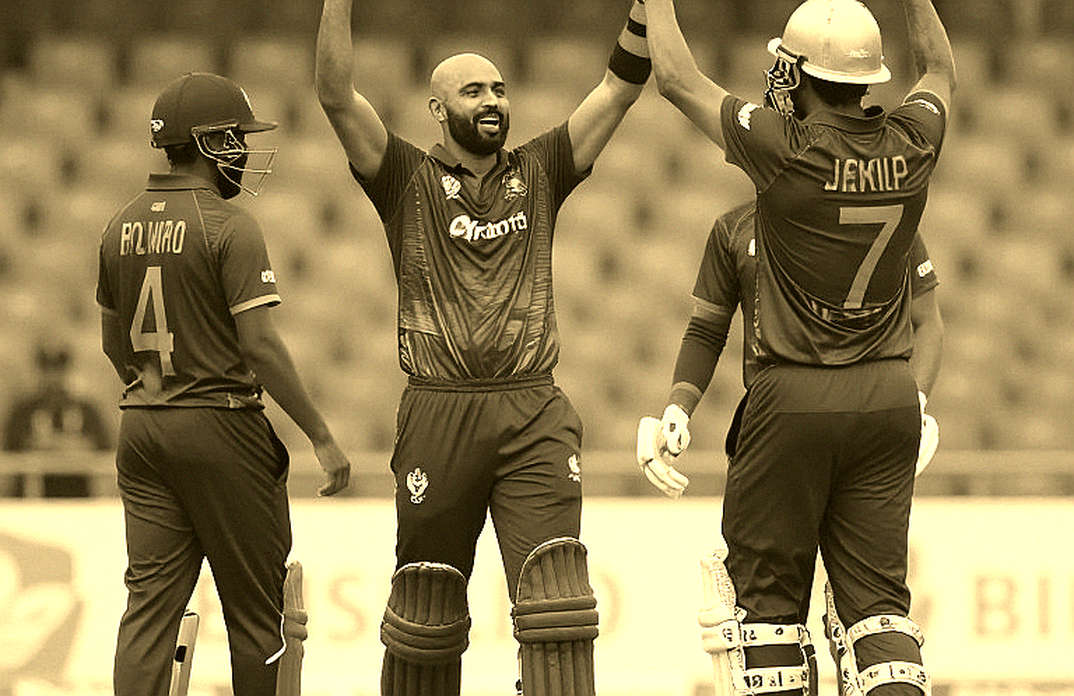
Fourth, New Zealand's XI and approach. Wholesale changes mean rebuild; an unchanged XI means performance crisis. This will help re-read the 3-0 scoreline as 'New Zealand's problem' rather than 'Indian superiority'.
Fifth, whether any official reason is given for Bhuvneshwar Kumar's omission. Explicit 'rest' or 'managed' language would convert an ambiguous absence into a clear rotation-policy signal.
Sixth, media language the next time a player is left out. If the word 'dropped' is repeated, it indicates a sustained narrative-pressure campaign on the selection committee.
Verification note: what to read with caution
Some details in this report could not be independently verified. The India captaincy is attributed to Shreyas Iyer and a 3-0 lead in Auckland on 30 October is described. These details come from a single source and were not confirmed within this material by a second independent source. Before any serious use, they should be cross-checked against official records.
Similarly, everything said about pitch conditions, weather, dew, rain risk and ground characteristics is an inference based on general calendar knowledge and general cricket knowledge, not on a report of this particular match. Late October is spring in New Zealand — cool temperatures, higher rain risk, and less dew than the March-April window. But all of this is inference, not fact.
The most important limit is this: this entire material contains no scorecard for any match, no ball-by-ball data, and no statistics for any player. Therefore, wherever the analysis in this report appears confident, it is confident about selection logic and media framing — not about player quality, team strength, or match outcomes. Sporting outcomes are highly uncertain and any conclusion should be viewed with balance.
Conclusion
The essence of this whole episode in one sentence: a young batter who was covering for an injured first-choice wicketkeeper-batter was left out when that player regained fitness — and this is ordinary selection logic, not a controversy. The real questions are these: was it appropriate to give a full load to a wicketkeeper returning from an adductor strain in a dead rubber; what does New Zealand being 3-0 down at home indicate; and how is the pathway of a very young prodigy being managed. The answers to these three questions are not in this report — and that is its biggest shortcoming.