
Change the Format, Change the Language: No Cricket Number Means Anything Without Its Context
क्रिकेट में टेस्ट, वनडे, टी20 और द हंड्रेड के आंकड़े एक-दूसरे पर लागू नहीं होते, क्योंकि हर प्रारूप की संरचना अलग है — टेस्ट में पाँच दिन और दो पारियाँ, वनडे में 50 ओवर और दोनों छोर से नई गेंद, टी20 में 20 ओवर और छह ओवर का पावरप्ले, और द हंड्रेड में 100 गेंद। किसी भी आंकड़े (स्ट्राइक रेट, औसत, इकॉनमी) का अर्थ तभी तय होता है जब प्रारूप, मैच का चरण, स्थान/पिच, नमूने का आकार और घरेलू-विदेशी विभाजन स्पष्ट हो। बारिश से बाधित मैच में लक्ष्य डकवर्थ-लुईस-स्टर्न पद्धति से तय होता है, जो बची हुई गेंदों और विकेटों को संसाधन मानकर पार स्कोर निकालती है। डीआरएस में टेस्ट के लिए प्रति पारी दो असफल रिव्यू और सीमित ओवरों के लिए एक असफल रिव्यू उपलब्ध होता है; अंपायर कॉल पर मैदानी फैसला बरकरार रहता है। टेस्ट क्रिकेट का ढाँचा आईसीसी विश्व टेस्ट चैम्पियनशिप के अंक-प्रतिशत से जुड़ा है, जबकि फ्रैंचाइज़ क्रिकेट में एनओसी, रिटेंशन और राइट टू मैच खिलाड़ी की उपलब्धता और कीमत तय करते हैं। जब स्रोत या आंकड़े उपलब्ध न हों, तो सही रिपोर्टिंग यह कहना है कि जानकारी नहीं है — अनुमान से विश्लेषण रचना नहीं।
One Number, Three Meanings
A batter's strike rate is 145. On its own, that sentence says nothing. If it is a T20 figure, it is good but unremarkable — dozens of batters in every major league sit there. If it is a one-day figure, it is close to exceptional. And if it is a Test figure, the first question must be how many innings it covers, in what conditions, and whether it includes the many innings in which the batter had no need to score quickly at all. One number, three different conclusions.
This is not a nuance. It is the most basic precondition of cricket analysis. Of the world's major sports, cricket is probably the only one that runs four structurally distinct competitions under a single name: the five-day Test, the 50-over ODI, the 20-over T20, and the 100-ball Hundred. Comparing numbers across them is like comparing a marathon runner's time with a sprinter's. Both are running. The measures are not shared.
So the first question any cricket report must answer is: what is the format? Until that is answered, everything else — average, economy, impact, comparison — remains incomplete.
Four Formats, Four Logics
Test cricket's logic is patience. Five days, a minimum of 90 overs a day, two innings each, and a real possibility that the match ends in a draw. Bowling plans are built in hours; bowlers wait for reverse swing once the ball is old; batters plan to bat long. A first-innings 400 can be a good score here, whereas the same 400 in an ODI guarantees nothing.
ODI logic is balance. The innings splits into phases: the first ten overs of powerplay, when only two fielders may stand outside the circle; overs 11 to 40, when four may; and overs 41 to 50, when five may. That structure shifts the balance of power between bat and ball over by over.
T20 logic is speed. One hundred and twenty balls, the first six overs of powerplay with a maximum of two fielders outside the circle, then the middle overs where spin does its work, then the death overs where every second ball is a decision. Assessing a T20 bowler's economy without separating these phases is a serious analytical error — a bowler can go at nine an over in the powerplay and seven at the death, and his true value will look very different from either figure.
The Hundred's logic differs because its clock differs. One hundred balls per innings, delivered in sets of five, with a rule allowing a bowler to deliver five or ten consecutive balls. The first 25 balls are the powerplay. A player conditioned to think in four-over spells cannot simply import T20 over-based arithmetic.
Test Cricket: Sessions, Patience and the WTC
Test analysis treats the three sessions of a day as separate units. The morning ball seams more; the afternoon may bring weather and swing; the evening may be the easiest time to bat. That is why "he took two wickets in the first session" carries independent value in Test reporting, while it has no real T20 equivalent.
The modern Test structure now sits inside the ICC World Test Championship, where series points are converted to a percentage so that the table is not distorted by teams playing different numbers of matches. The consequence is that a single series result is no longer a local matter — it moves a two-year table. A handful of lost points can keep a side out of the final.
The toss matters most here. On a dry subcontinental pitch, choosing to bat first effectively prepares the surface for spinners by the fourth innings; on a green English pitch, bowling first is close to compulsory. No Test result can be analysed with the toss left out.
ODI: The Arithmetic of Two New Balls
Since 2026, ODIs have used a new ball from each end. That single change altered the structure of the game. Previously, a quick bowler who could reverse-swing the old ball was dangerous inside the first ten overs too; now both balls stay relatively new until around the 25th over of the innings, and the spinner's importance in the middle overs rises naturally. Any assessment of a spinner's ODI economy therefore has to state how many of his overs came in the middle phase and how many at the death.
There is another side to the ODI: chase pressure. 250 for three and 250 for five look identical on a scoreboard, but the second leaves far less room for acceleration in the remaining overs. Wicket-fall patterns must be read separately from the score, or the number will be right and the conclusion wrong.
T20: Powerplay, Middle, Death
The most useful analytical division in T20 is threefold. In the powerplay the batter is forced to play inside the circle because only two fielders are out, so boundaries come mainly from errors of line and length. In the middle overs spin builds pressure and the run rate often drops. In the death overs the fielders go back out but the batter is free to hit in the air — which is why death economy and powerplay economy cannot be measured on the same scale.
It is also worth remembering that league T20 numbers and international T20 numbers are not the same thing. Bowling quality is distributed differently in leagues, overseas-player availability differs, and pitches are often prepared to tournament brief. Extrapolating a league breakout directly to international level is a risky inference.
The Hundred: A Different Clock, Different Measures
The Hundred was launched in 2026 by the England and Wales Cricket Board, and its central experiment is that the innings is measured in balls rather than overs: sets of five, with a bowler permitted to deliver five or ten in succession. A player used to thinking in a four-over quota has to think in twenty-ball or ten-ball quotas instead.

The analytical consequence is that Hundred numbers cannot simply be merged with T20 numbers, however similar the two formats look in duration. Until a number carries its format label, it is technically unusable.
Duckworth-Lewis-Stern: A New Question After Rain
When rain interrupts a limited-overs match, the target is not set by run rate alone. The Duckworth-Lewis-Stern method is used, developed by Frank Duckworth and Tony Lewis in the 1990s and later revised by Steven Stern. The method assumes a team has exactly two resources — balls remaining and wickets in hand — combines them into a resource percentage, and derives the revised target or par score from that.
The practical implication is that any analysis of a rain-affected result must state how many overs and how many wickets remained at the moment of interruption. Writing that "rain changed the course of the match" is not analysis; it is a vague remark.
DRS: Technology, Appeals and Umpire's Call
The Decision Review System lets players challenge the on-field umpire, using ball-tracking and edge-detection technology. In Tests each side gets two unsuccessful reviews per innings; in the shorter formats there is one unsuccessful review per innings, and a successful review is retained.
Umpire's call matters here. If ball-tracking shows the ball only clipping the stumps, or impact is inconclusive, the on-field decision stands. The provision exists so that a millimetre of technology does not decide the outcome of a game. It also means that any discussion of a disputed dismissal must specify whether the decision survived on umpire's call or was overturned on evidence. The two mean entirely different things.
Why Cross-Format Comparison Fails
Back to the opening question. If a batter averages 45 in Tests and strikes at 140 in T20, there is no technically valid way to combine the two into a single "overall value" score. The reason is straightforward: the risk-and-reward structure differs. In a Test, one false shot can cost thirty runs of an innings; in a T20, the same false shot can become a six off the next ball.
Likewise, any comparison of a bowler's economy must name the format, the phase and the conditions. Otherwise the comparison will look correct and the conclusion will be wrong. This is the most frequently broken rule in cricket analysis, and the most expensive.
Home and Away: The Largest Structural Gap
Cricket's home-away differential is generally regarded as the widest in any major sport, because five variables change at once: pitch, weather, ball, light and crowd. The control an Asian spinner exerts on a dry subcontinental surface is naturally reduced on a bouncy Australian pitch. A fast bowler's average on English grass and on a flat Pakistani pitch cannot be the same.
Career numbers therefore need a split: how much was built at home and how much away. An assessment without that split often produces a picture in which the shine of home numbers hides genuine weaknesses.
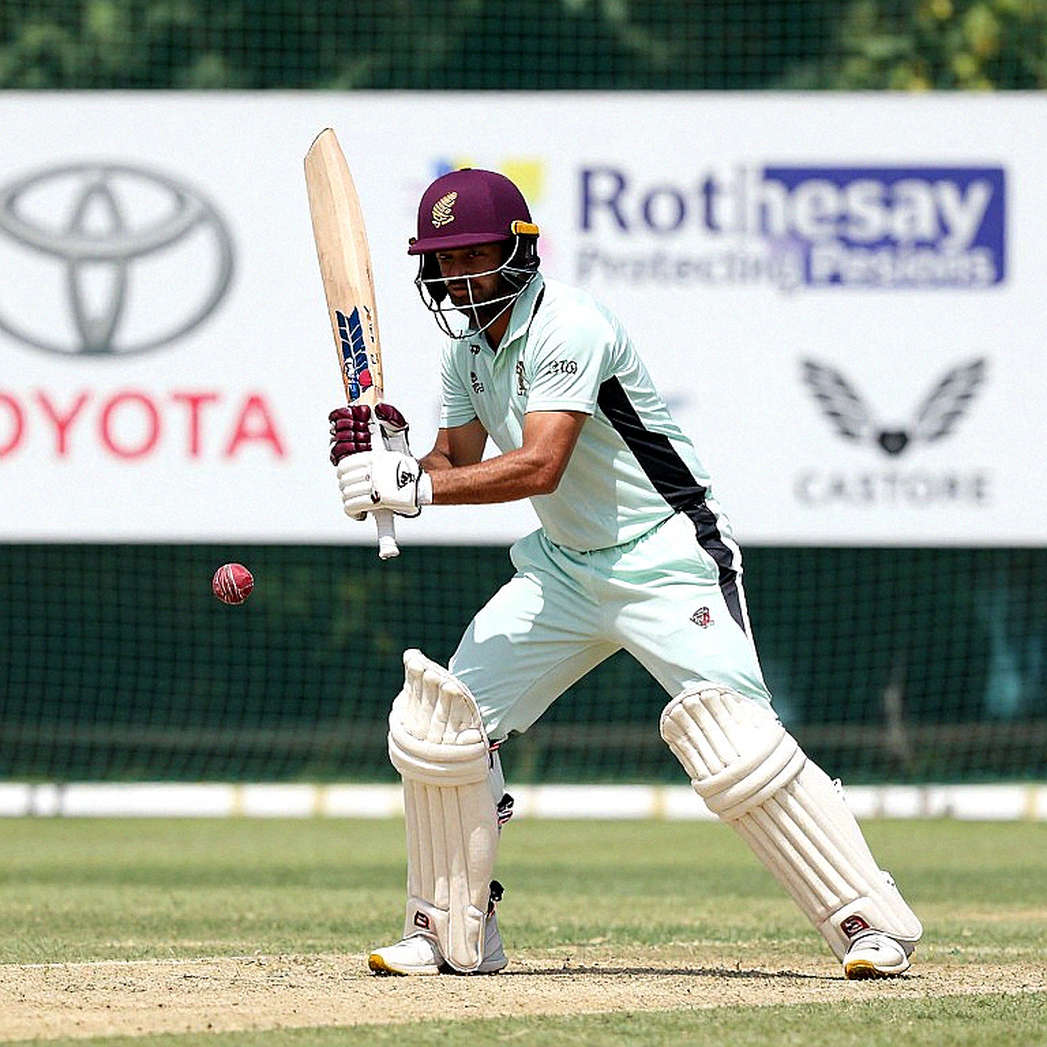
Player Assessment: Role, Age Curve, Sample
A player's numbers take their meaning from his role. An opener averaging 40 and a number six averaging 40 are not equivalent, because the latter receives most of his innings in situations that demand acceleration. Similarly, an all-rounder's value does not come from adding his two skills together but from the squad balance he enables — one place in the XI covering two responsibilities, freeing a slot for another specialist.
The age curve cannot be ignored either. A fast bowler's pace and endurance typically peak in the late twenties and early thirties, while a spinner's control and experience often become more useful in the mid-thirties. In batting, reaction time declines gradually while decision-making improves.
The biggest trap is sample size. Drawing career conclusions from five excellent innings is as wrong as declaring a decline after one bad series. Injury history never appears in the numbers but has the largest effect on availability.
League Ecosystem: From IPL to MLC
Cricket's commercial structure now runs on several levels. The IPL began in 2026 and is the sport's largest financial force. The Big Bash League started in 2026, the Pakistan Super League in 2026, The Hundred in 2026, and both SA20 and Major League Cricket in 2026. Each league's economic model differs — some rest on broadcast rights, some on franchise valuation, some on the availability of overseas players.
A permanent tension runs through this structure: the calendar priority between league and national team. When a league window collides with an international series, the board must decide what comes first, and the player must decide which stage is worth more at that point in his career.
One more caution applies to league data. Assessing league performance requires knowing where a player batted, how many balls he received, and the quality of the bowling he faced. Counting runs and wickets alone is an incomplete way to price a player.
NOCs, Retention and Right to Match
To play in an overseas league, a player needs a No Objection Certificate from his home board. It is an administrative document with a direct career effect: a refused NOC means the player is unavailable, and the reason is usually workload management or national commitment.
In franchise cricket, retention and Right to Match mechanisms shape a player's price. RTM allows a previous franchise to match the highest bid and keep the player. The effect is that auction prices reflect squad structure and market strategy as much as on-field output. Judging a signing purely by the fee is therefore misleading — sometimes a high price fills a need, and sometimes it is a decision taken under auction pressure.
Governance and Integrity: ICC, ACU, Slow Over Rates
Cricket governance runs at three levels: the ICC internationally, the boards nationally, and the organisers at league level. Any rules dispute is settled at one of these three, and it matters which one has jurisdiction.
The ICC Anti-Corruption Unit monitors integrity, investigating and watching for match-fixing and spot-fixing. Separately, slow over-rate fines are a routine disciplinary process with a real strategic effect — especially in Tests, where both the pace of spin bowling and the time taken to change fields are counted.
To the casual viewer these look technical, but their effect on outcomes is real. Any explanation of a result should state whether a disciplinary action occurred, whether a review controversy existed, and whether an administrative decision was influencing play.
Commercial Value Versus Sporting Value
Every player carries two values: sporting value, which is what he adds on the field, and commercial value, which is what he adds to tickets, broadcast and brand. Measuring both on one scale is a major analytical error, because a player can be highly effective and little discussed, or heavily discussed and of limited use in a particular format.
Understanding the distinction improves the reading of auction and selection decisions. When a franchise spends heavily on a player, it is usually buying both values at once. Which component weighed more, and whether the investment returned on the field, is a separate question.
Narrative and Expectation: The Overhype Risk
Cricket's public narrative builds fast and breaks fast. One brilliant innings makes a young player "the next big thing" within days; three quiet innings later, the same player is called overhyped. Both reactions are premature.
A sound assessment needs three checks. First, is this performance a signal of underlying ability or an artefact of circumstance? Second, how large is the sample? Third, is there a gap between market expectation and objective assessment? If there is, that gap is usually the most useful information available.
The historical conversion rate from T20 league breakout to international success has been low. Not because league standards are poor, but because conditions, pressure and the structure of responsibility differ at international level.
The Integrity of Data Reporting
There is a practical conclusion to all of this. A report that omits format, venue, date and source has zero analytical value, however many numbers it contains. And when the data simply is not available, the correct step is to state that clearly rather than to construct a confident-looking analysis out of inference.
This discipline matters especially in sports journalism, because readers treat numbers as facts. A wrong comparison creates a wrong opinion, and that opinion then reaches selection, auctions and reputations.
Conclusion
Every cricket number is a sentence that needs its context. Name the format, name the phase, name the venue, name the sample — then the figure says something. A report that reverses the order, reaching the conclusion first and hunting for context afterwards, is not analysis no matter how confidently it is written. It is inference.
Through its four formats, this sport has taught a simple lesson: the same skill carries different value in different structures. Accepting that is not a weakness of cricket analysis. It is its greatest integrity.