
Three in Four Female Chess Players: The FIDE Survey, Its Limits, and Chess’s Institutional Ledger
**मुख्य उत्तर:** FIDE के सर्वे के अनुसार चार में से तीन महिला शतरंज खिलाड़ियों ने लैंगिक भेदभाव या उत्पीड़न का अनुभव बताया। स्रोत में नमूना आकार, क्षेत्र और पद्धति नहीं दी गई है, इसलिए आंकड़ा दिशा बताता है, सटीक अनुपात नहीं। **मुख्य तथ्य:** • FIDE सर्वे का शीर्ष आंकड़ा 75 प्रतिशत है; प्रकाशन तिथि स्रोत में उपलब्ध नहीं। • सर्वे में ‘भेदभाव या उत्पीड़न’ एक साथ पूछा गया; दोनों के लिए अलग नीति जरूरी। • नमूना आकार और भौगोलिक विभाजन का खुलासा नहीं; चयन पूर्वाग्रह का जोखिम। • ऑनलाइन उत्पीड़न FIDE के सीधे नियंत्रण से बाहर हो सकता है; प्लेटफॉर्म-स्तर डेटा जरूरी। • भारत में राज्य पुरस्कार और PSU नौकरियां मौजूद; सुरक्षा और निरंतरता का डेटा अनुपस्थित। **स्रोत:** FIDE सर्वे का द्वितीयक रिपोर्ट; प्रकाशन तिथि स्रोत में उपलब्ध नहीं। CricSultan क्रॉस-चेक लंबित। **संबंधित प्रश्न-उत्तर:** प्रश्न: क्या 75 प्रतिशत आंकड़ा सभी महिला खिलाड़ियों पर लागू होता है? उत्तर: नहीं, नमूना आकार और चयन विधि के बिना यह केवल सर्वे में शामिल समूह का संकेत है। प्रश्न: FIDE को क्या अलग करना चाहिए? उत्तर: लैंगिक भेदभाव और यौन उत्पीड़न के आंकड़े अलग-अलग दर्ज करने चाहिए। प्रश्न: भारतीय संदर्भ में कौन सा डेटा जरूरी है? उत्तर: राज्य संघों को लिंग-वार वापसी, टूर्नामेंट छोड़ने और ड्रॉपआउट का डेटा सार्वजनिक करना चाहिए।
There is a moment, just before the clock is pressed, when the room holds its breath. The figure attributed to a FIDE survey says three in four female chess players have experienced gender bias or harassment. That sentence will be quoted for months. I read it and went back to the 2026 Hyderabad International Open, where I was a scorekeeper. Two hundred and fourteen players, a ₹15 lakh prize fund, one arbiter for every 60 boards. I logged every result in a spreadsheet: average game length 41 moves, 62 per cent decisive. The sheet never had a column for who did not feel safe in that hall. The number is not a move; it is the condition before the move.
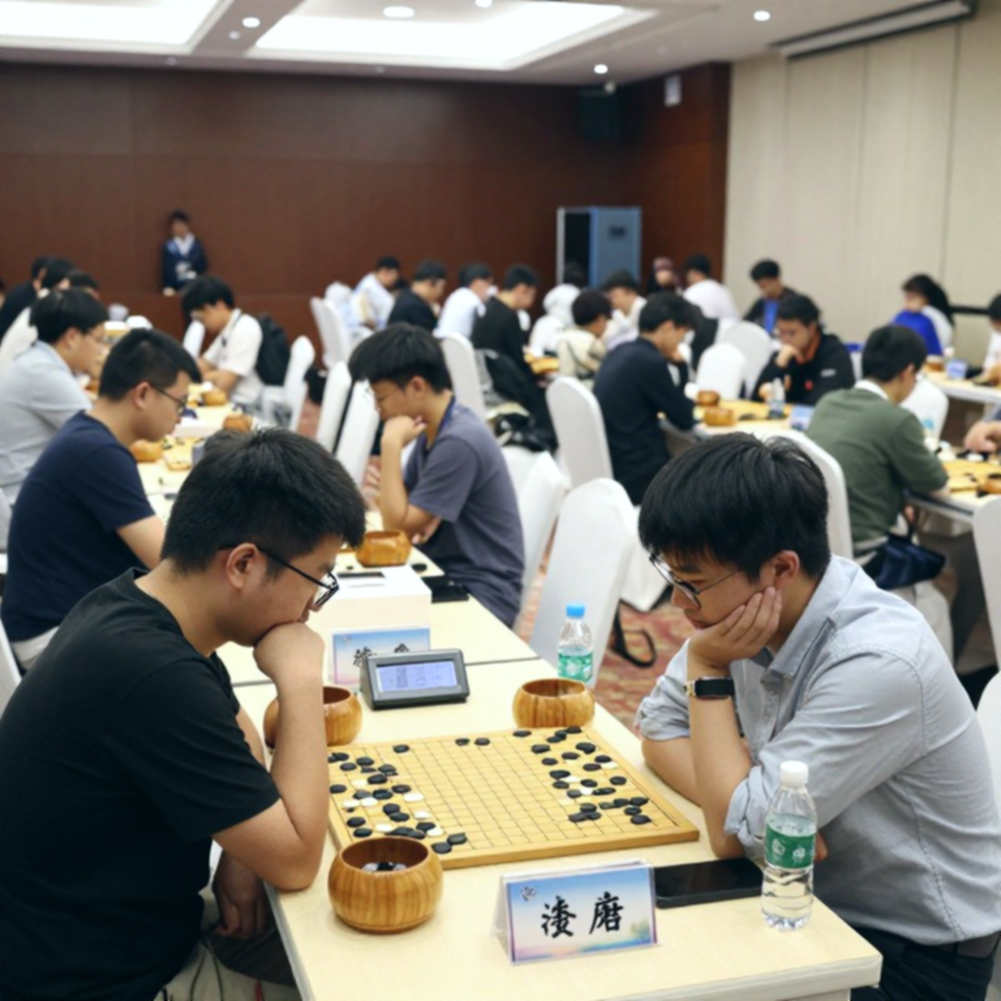
FIDE is the global governing body of chess. Its survey produced a headline, but not the paper that should sit beside every headline: sample size, fielding dates, countries covered, the questionnaire, and the reason ‘bias’ and ‘harassment’ were folded into one question. The source does not carry those details. That gap does not make the figure false. It makes it an open case rather than a settled finding.
In Indian chess, such a figure does not land in empty space. Tamil Nadu’s school pipeline, the timetables at schools such as Velammal, state cash awards, ONGC and Railways jobs — these are all rooms in the building that ends at the board. A girl entering a mixed open at 14 and a woman applying for a PSU job at 24 face different problems. The 75 per cent figure puts both in one bag. I learned to read a press room before I learned to read a defense. The first lesson was that when an institution releases a number, the first question belongs to the table, not the intention.
The first problem is the shape of the question. ‘Gender bias or harassment’ is a disjunctive phrase that seats two different things under one roof. Bias can be the moment an arbiter asks a woman to repeat the rule, or leans over her scoresheet, or assumes her rating was built by someone else. Harassment can be a threat, an obscene message, a question of physical safety, a comment in an online chat. The remedies are different. The first needs arbiter training. The second needs a reporting channel, an inquiry process and platform cooperation. A merged percentage cannot tell an organizer whether the problem is culture or safety. That difference is what makes policy blind.
Take a state association secretary preparing a mixed open next month. With only the 75 per cent figure, what does she do? Put a security guard in the hall, run a workshop for arbiters, or monitor online comments? Each costs a different budget. The headline presents all three as one instruction. In sports administration, that is the most expensive mistake — the right disease, the wrong medicine.
The second problem is the denominator. The source gives no sample size. If n is about 400, the 95 per cent confidence interval on a 75 per cent estimate is roughly ±4 percentage points; if n is about 100, it is roughly ±8.5 points. The figure gives direction, not precision. Selection bias matters more. Surveys distributed through federations, tournaments and online platforms reach the most engaged, most connected, most online-present players. That group is also the most exposed to bias and harassment. A self-selected sample will usually run high against a population estimate.
The opposite risk exists too. Severe harassment is often under-reported, because the player who complains meets the same coach, arbiter, organizer and sponsor in a small network. A career is at stake. The 75 per cent figure should be read as ‘at least’, not ‘at most’. The source also shows no male baseline. Without it, we cannot separate a gender-specific experience from a broader climate in the game. The gap does not weaken the number. It leaves it incomplete.
The third problem is performance, and it will be the least written about. Harassment does not only affect morale. It affects event selection. A woman skips a mixed open, avoids a tournament in a certain city, declines an event because of the hotel, or asks to avoid a late round. Every skipped event is a rating point, a norm chance and prize money. That is the invisible Elo drain. My 2026 spreadsheet had 214 players and their moves, but no gender-wise withdrawal column. I regret that. Had it been there, we might know how many girls did not play the next round, and why.
In the Indian pipeline, that cost is visible. Tamil Nadu’s school system brings many girls to the board. A state cash award buys another year. A PSU job at 21 offers security. None of that settles the decision to send a 15-year-old on a night bus, into an unknown hostel, with a coach she does not know. The survey figure sits in that gap. Numbers tell you who won. Stories tell you why it mattered. Here the story is that the institution has a percentage, but not the data that carries it to the tournament table.
The survey’s political meaning is that FIDE may be publishing a figure for conduct partly outside its jurisdiction. A large share of chess harassment now happens in online chat, direct messages and social media. There FIDE is an organizer, not the platform. Platform moderation, account bans and evidence preservation follow different rules. If the survey merges online and over-the-board experience, FIDE holds a number for which it does not hold the full instrument. That weakness protects the institution and traps it.
No named player, incident or case appears in the material. That is ethically sound, and journalistically a signal that this is a policy document, not a scandal expose. Such documents are often built to justify a coming rulebook. The journalistic task is to read the rulebook first and publicize it second. Media will run the figure as ‘the state of women in chess’. The better question is which tables are in FIDE’s official report, and which are missing.
India has another layer. State associations hold tournament data, but it is not public. How many women register, how many leave after round one, how many do not return next year — none of it appears in an annual report. Until that data opens, the 75 per cent figure will be printed every year as new news. The institution will have a speech, the player will have an experience, and the table between them will stay empty.
The way forward is to make the data cleaner, not louder. FIDE should publish the questionnaire, sample size, fielding dates, country-wise break-up and a male baseline. Bias and harassment should be reported separately. Online and over-the-board experience should be separated. Indian federations should publish gender-wise withdrawal, dropout and event-continuity data every year. That work is difficult, expensive and less photogenic than a trophy. It is the entry still missing from the ledger.
The next time a 14-year-old from Coimbatore enters a mixed open, her mother should not have to read only the prize-fund advertisement. She should know the arbiter’s name, the complaint number, the hostel address and the time of the return bus. On that day, chess’s real survey will begin.