
Lahore's Record Chase: Pakistan Gun Down 326 With Three Wickets to Spare as Fakhar, Babar and Arafat Shine
लाहौर में त्रिकोणीय वनडे सीरीज़ के फाइनल में पाकिस्तान ने श्रीलंका के 325/8 के जवाब में 331/7 बनाकर 326 का लक्ष्य तीन विकेट और नौ गेंद शेष रहते हासिल किया। यह चेज़ भारत के 2002 त्रिकोणीय फाइनल में इंग्लैंड के खिलाफ 326 के चेज़ के बराबर बताया जा रहा है और मैच का 656 रन का कुल योग रिकॉर्ड माना जा रहा है। फखर ज़मान के 300 से ऊपर के चेज़ में चार शतक (पाकिस्तानी बल्लेबाजों में सर्वाधिक) और 96 पारियों में 4,000 रन, बाबर आज़म के 82 पारियों में 4,000 रन, शाहीन शाह अफरीदी का 331 तक पहुंचाने वाला छक्का, और अराफात मिन्हास के पहले आठ वनडे में दो अर्धशतक व दो पंचविकेट प्रमुख बिंदु हैं; कामिंडु मेंडिस ने श्रीलंका के लिए 131 रन बनाए। इसी सीरीज़ में पाकिस्तान 110 रन पर ढेर हुआ था, इसलिए यह जीत क्षमता दिखाती है, निरंतरता नहीं। ध्यान दें: सभी रिकॉर्ड बिना नामित स्रोत के हैं और आधिकारिक स्कोरकार्ड से सत्यापन लंबित है।
Pakistan chased down 326 in the final of a tri-nation ODI series in Lahore, finishing on 331/7 with three wickets and nine balls remaining. The target is being described in reports as the joint-highest successful chase of its kind, matching India's 326 against England in the 2026 tri-nation final, and as the highest successful chase in an ODI tournament knockout. The match aggregate of 656 runs is being presented as the highest combined total in a tri-nation series or tournament final.
One caveat must be stated at the outset. Every record, figure and claim below rests on publicly circulating reports, none of which carries a named source. Until they are checked against the official scorecard, the ICC's records section or a recognised statistical database, they should be treated as data pending verification. That warning does not diminish the story, but it gives the reader the right to check any number before repeating it.
What the match looked like
Sri Lanka batted first and made 325/8. Pakistan chased it down at 331/7. Nine balls remaining means the Pakistan innings ended at 48.3 overs; seven wickets down means three were in hand.
That detail matters. A 326 chase completed with three wickets intact was not a cruise. Losing seven wickets and still getting home with nine balls to spare points to a decisive lower-order finish. The available record notes a six from Shaheen Shah Afridi that took Pakistan to 331 — the winning blow came from the lower order.
What is missing matters just as much. There is no toss, no pitch report, no dew assessment, no weather interference, no Duckworth-Lewis-Stern revision. Without those, no deep technical conclusion about conditions can be drawn.
What can be inferred is limited. Lahore produced 656 runs, both sides passed 300, and one side made 331 in 48.3 overs. Together those point to a batting-friendly surface. But that is inference, not confirmation.
Sri Lanka's innings: Kamindu Mendis's 131
Kamindu Mendis made 131. On the available claims, that is Sri Lanka's third-highest individual score in an ODI final, behind Sanath Jayasuriya's 189 and Marvan Atapattu's 132 not out. It is also described as the second-highest individual score in an ODI final against Pakistan, behind Brian Lara's 153 in 2026.
Those are elite historical comparisons. But Sri Lanka lost, so the innings was high quality and ultimately non-decisive. The record gives no strike rate, no partnership detail, no dismissal phase. Whether Kamindu anchored the innings or merely accumulated cannot be established without the full scorecard.
The chase: why the record matters
The 326 chase is the headline. The claims around it need splitting into three parts. First, was it actually 326 — directly checkable against the scorecard. Second, is it the highest in a tournament knockout — that depends entirely on how a database defines 'final', 'knockout' and 'tournament'. Third, was the 2026 India-England match a tri-nation final — also checkable.
This report presents those as reported claims, not established facts.
Fakhar Zaman: four centuries in 300-plus chases
Fakhar has four ODI centuries while chasing 300 or more, the most by any Pakistan batter, with Babar Azam and Younis Khan on three each. That is not merely a run count; it is a pressure-specific pattern. A 300-plus chase means required-rate pressure every over, refusing to slow after wickets fall, and managing risk while still playing big shots.
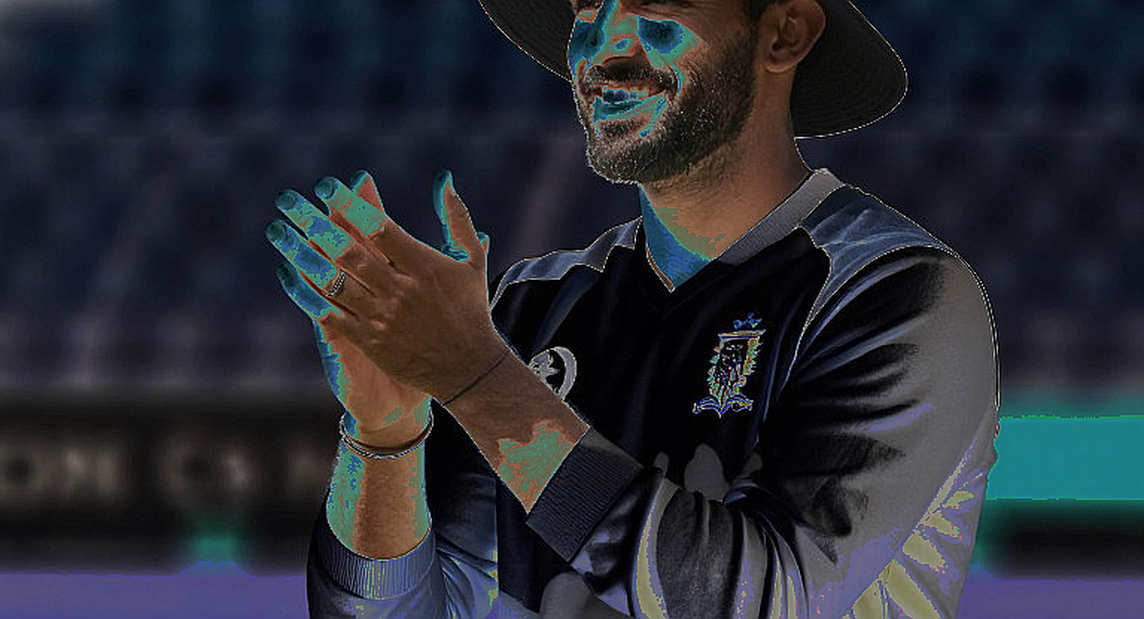
He has played three ODI tournament finals and made two centuries, becoming the second Pakistan batter after Saeed Anwar to do so. That is a big-match signal, but three finals is far too small a sample to call anyone a 'final specialist'.
He reached 4,000 ODI runs in 96 innings, described as the second-fastest by a Pakistan batter. Babar got there in 82. But average, strike rate, home-away splits, first-innings versus chase splits and recent trend are all absent, so a full technical assessment is impossible.
It is plausible Fakhar scored a century in this final, given the two-in-three-finals record and a separately noted 2026 Champions Trophy final hundred — but that is inference.
Babar Azam: 4,000 runs in 82 innings
Babar's 82-innings route to 4,000 ODI runs is a strong pace-of-scoring milestone. If Fakhar is second-fastest at 96 innings, Babar is almost certainly the fastest Pakistan batter to the mark. That is an inference from two figures, but a direct one.
He also has three centuries in 300-plus chases, confirming high-level chasing output, though he trails Fakhar in that specific niche.
The captaincy references in the available material are inconsistent. One line calls it 'Shaheen Shah Afridi's team', later lines say 'Babar and Shaheen's side' and 'Babar and Fakhar's side'. That is an attribution problem, not a settled fact. The official scorecard resolves it in seconds.
Babar's actual contribution to this chase is not described, so it cannot be quantified.
Shaheen Shah Afridi: one six and an unclear captaincy
The one concrete detail is his six that took Pakistan to 331. Small detail, large signal: seven wickets down, three in hand, nine balls left, and the winning blow came from the lower order.
No bowling figures are given — no overs, no wickets, no economy. So his performance as the likely lead pace bowler cannot be assessed, which is a significant gap given Sri Lanka made 325.
His captaincy status is not reliably established. A batting cameo that seals a record chase will be remembered disproportionately; it does not imply reliable lower-order batting.
Arafat Minhas: two fifties and two five-wicket hauls in eight ODIs
On the available claims, Arafat became the second cricketer in the world to score two 50-plus innings and take two five-wicket hauls in his first eight ODIs, after JJ Smit, who did it in his first ten.

That is an unusual dual-impact start and would improve Pakistan's squad balance by providing a genuine all-round option. But eight ODIs cannot establish batting position, bowling style, opposition quality or home-away robustness. It is also the single biggest overhype risk in this story.
Nine years and the 110 all out
The win is described as Pakistan's first multi-nation ODI title since the 2026 Champions Trophy — a wait of roughly nine years. The definition of 'multi-nation title' needs checking before that is repeated.
The more revealing fact is the within-series swing. Pakistan were bowled out for 110 by Sri Lanka earlier in the same series, then chased 326 in the final. That is the widest possible variance band, and it is why the 'unpredictable' label fits the data.
The 656 aggregate and the surface
656 runs points to batting-friendly conditions. It does not tell you pace, bounce, turn or dew. Lahore evening dew is a familiar factor, but it is not mentioned. Without conditions, the numbers cannot be fully contextualised.
The 331 is described as Pakistan's second-highest ODI knockout score, behind 338/4 against India in the 2026 Champions Trophy final. If accurate, it shows a team capable of producing huge scores on the biggest occasions — and capable of 110 on others.
What still needs verification
The score itself: 325/8, 331/7, three wickets, nine balls. If any figure is wrong, everything built on it collapses.
The record claims: the 326 equaliser, the highest knockout chase, the 656 aggregate, the second-highest knockout score. Each depends on a specific category definition.
The individual numbers: Fakhar's four centuries, Babar's 82 innings, Kamindu's 131 ranking, Arafat's eight-ODI record.
The captaincy: the official scorecard settles it.
The date and series name: not supplied, which limits context.
Risk assessment
The biggest sporting risk is mistaking one home final for a durable turnaround, especially after the 110 all out in the same series. The second is home-ground bias: Lahore conditions likely helped, and no away data is provided. The third is source transparency: no claim carries a named source. The fourth is overhyping Arafat Minhas on eight ODIs. The fifth is the captaincy and role ambiguity. The sixth is workload and injury, about which nothing is known for Fakhar, Babar or Shaheen.
What to track next
Pakistan's next five to ten ODIs, especially away or at neutral venues. Fakhar's chase-versus-first-innings split. Arafat Minhas's batting position, bowling quota and fitness. Pakistan's bowling against strong top-six lineups. Official confirmation of the captain. The PCB's home-series calendar.
Conclusion
Lahore produced a genuinely significant ODI knockout performance: 326 chased with three wickets and nine balls to spare, finished by the lower order. Fakhar Zaman's four centuries in 300-plus chases is the strongest individual signal. Babar Azam's 82-innings route to 4,000 runs shows consistency. Arafat Minhas's early record is an intriguing possibility.
But three things must be held alongside it. It was a home win, and without away evidence it is not proof of a permanent shift. The same series contained a 110 all out, so the volatility question remains open. And every record claim here is pending verification.
This win is evidence of Pakistan's ceiling. It is not evidence of Pakistan's consistency. The gap between those two is where the next argument will be fought.
Glossary
ODI: One-Day International, 50 overs per side; metrics are not directly comparable with Test or T20.
Tri-nation series: a tournament involving three national teams, usually with a final.
Chase: the second team's innings pursuing a set score.
Wickets remaining: 'three wickets remaining' means the batting side still has three wickets in hand.
Innings: a team's or batter's batting turn.
All-rounder: a player contributing as both batter and bowler.
Five-wicket haul: a bowler taking five or more wickets in an innings.
DLS: Duckworth-Lewis-Stern, the rain-revision method; not mentioned as relevant here.
DRS: Decision Review System; not mentioned as relevant here.
Disclaimer
This report is based on publicly available information and preliminary text analysis. All records and figures are pending verification and should not be cited without checking an official scorecard or recognised statistical source. This is sports information only and does not constitute betting advice. Sporting outcomes are highly uncertain; treat analytical conclusions rationally.